Step one is the print. The moat is everything after.
A printed part is worthless to a defence programme until it is finished to machined tolerances, heat-treated to full properties, inspected to acceptance criteria and documented end to end. KRITTVA DNA is building those stages in-house in a purpose-built Bangalore facility, with hot isostatic pressing through a validated vendor: one flow, one quality system, one audit trail.
Laser Powder Bed Fusion, part by part.
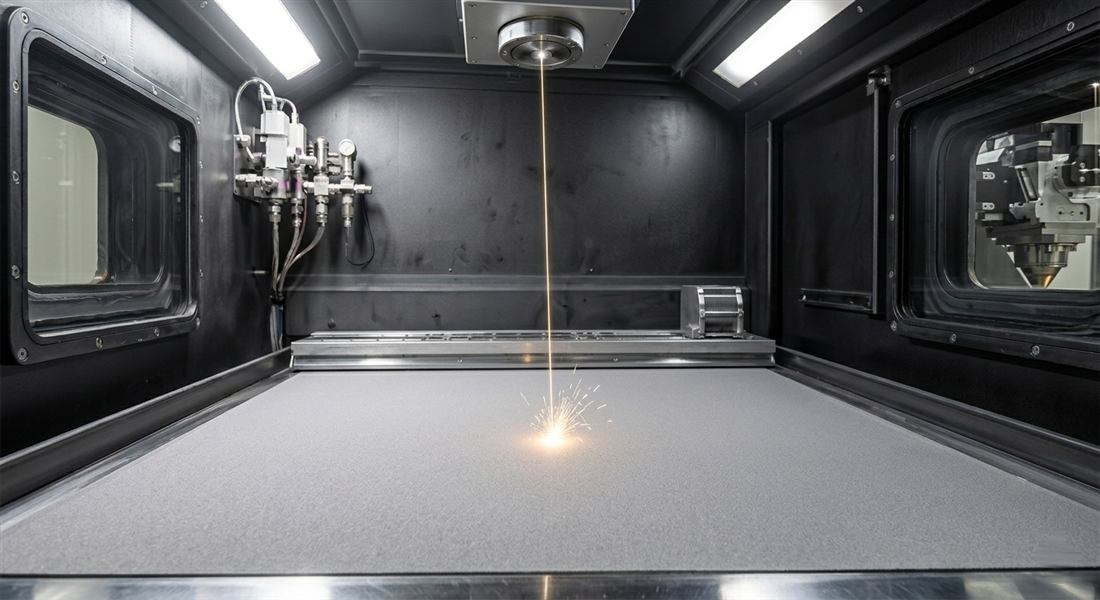
A laser selectively melts fine metal powder in micron-thin layers inside an inert argon chamber, fusing it into solid metal layer by layer.
-
Spread & melt
A recoater lays a powder layer; the laser fuses the part’s cross-section.
-
Layer by layer
The build plate steps down by less than a hair’s width and the cycle repeats, thousands of times.
-
Inert atmosphere
Argon shielding keeps oxygen low for clean, crack-free metallurgy.
-
Then finish
Heat-treat, 5-axis machining and inspection turn the raw build into a qualified part, with HIP through a validated vendor.
Beyond the printers: machining, heat-treat and the lab.
The Phase-1 platform is specified around the flagship-part envelope and an AS9100-grade flow. Every machine is chosen for the chain, not the brochure.
| Laser Powder Bed FusionAdditive | Ring-spot scan strategy applied by a certified scan-strategy developer, on dedicated titanium and nickel-superalloy lines in a cleanroom print bay. |
|---|---|
| 5-Axis CNC MachiningSubtractive | Simultaneous 5-axis machining sized to the full flagship-part envelope, for tight-tolerance finishing of critical interfaces and datums. |
| Vacuum heat treatmentThermal processing | Stress relief, solution treatment and ageing run in-house to aerospace pyrometry standards; hot isostatic pressing through a validated vendor in the same quality flow. |
| Wire EDM & depowdering lineFinishing | Build-plate cut-off, support removal and automated powder recovery: the unglamorous stages that decide yield. |
| CT · NDT · CMM cellInspection | Industrial computed tomography, fluorescent penetrant inspection, radiography and coordinate metrology, with 100% inspection on flight hardware. |
| In-house test labMaterials laboratory | Chemistry, mechanicals and metallography in-house, on the ISO/IEC 17025 (NABL) accreditation roadmap. |
Sovereign powder. Aerospace alloys.
Metal powder is the input a defence programme audits hardest. We design around India-atomised aerospace powder: duty-free, defence-approved, traceable and sovereign. Never material a qualification authority would reject.
Titanium
Ti-6Al-4V
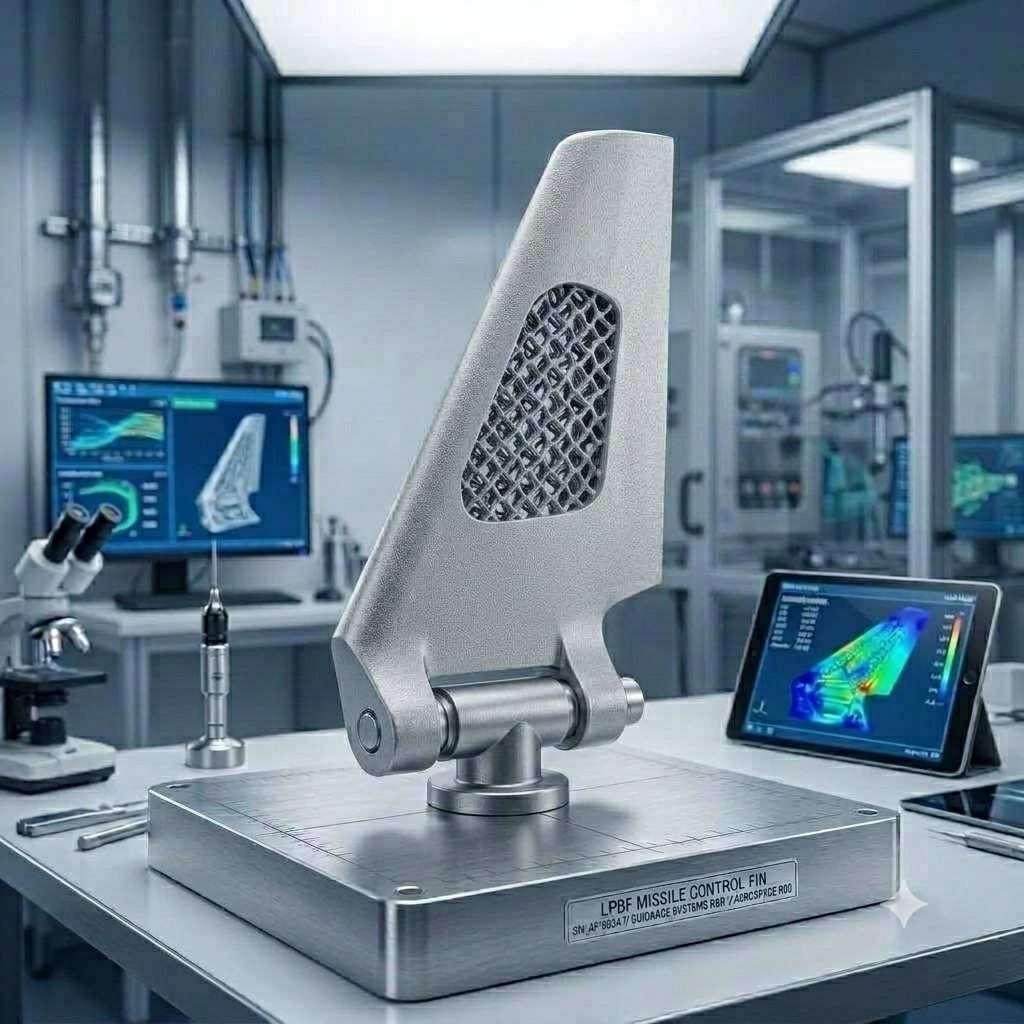
The aerospace workhorse: highest strength-to-weight for airframe fittings, satellite structures, control surfaces and payload hardware.
- Satellite structures · missile fins · brackets
- India-atomised aerospace powder
- Powder-bed standard ASTM F2924
Nickel superalloy
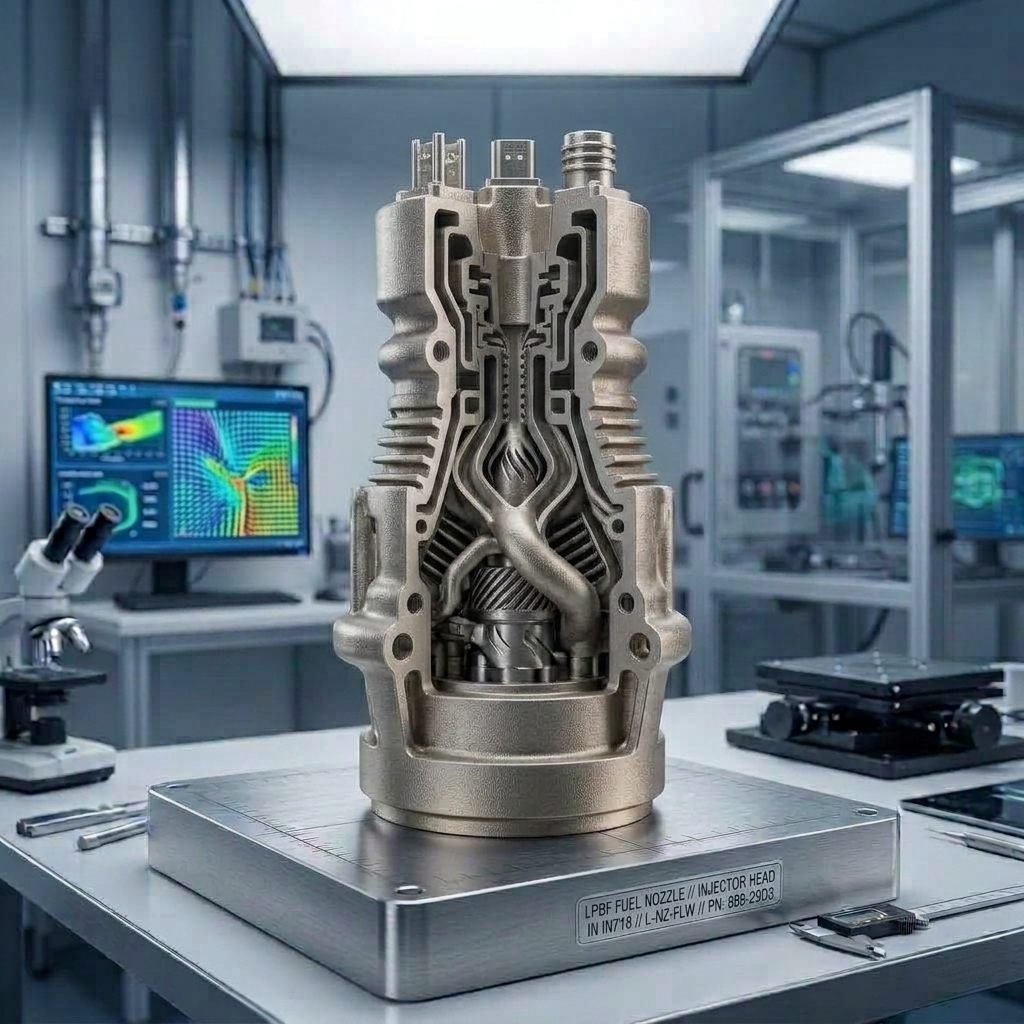
Inconel 718
Strength at temperature for the hot end: fuel nozzles, thrusters, turbopump hardware, fluid systems and fuze bodies.
- Propulsion · hot-section · fluid systems
- India-atomised aerospace powder
- Powder-bed standard ASTM F3055
From Year 6, medical implant production runs Grade 5 Ti-6Al-4V from the same India-atomised supply, printed to ASTM F2924, in batch-segregated lots under ISO 13485.
Purpose-built in KIADB Aerospace Park, Bangalore.
A site being fitted out to AS9100-grade from day one: Class 10K cleanroom printing environment, argon infrastructure, and a floor planned around the flow of a part, not the footprint of the machines.
Designed for 24/7 production. Three-shift operations with dedicated quality and lab engineering on every shift, and expansion headroom engineered into the building from the start.
| Location | Purpose-built site at KIADB Aerospace Park | BANGALORE |
|---|---|---|
| Facility | Every stage on one floor, from print to final inspection | SINGLE ROOF |
| Environment | Cleanroom print bay | CLASS 10K |
| Operations | Three-shift production | 24 / 7 |
| Expansion | Room for further cells as demand grows | RESERVED |
A sequenced certification roadmap, led from experience.
A six-certification stack, each layer earned over years and kept audit after audit. Our founder has worked inside AS9100 aerospace production and ISO 13485 implant manufacturing in the United States, and carried a printed titanium implant through FDA clearance. KRITTVA DNA’s quality system is being authored before the first machine arrives, not after.
- Phase 1ISO 9001:2015Quality-management foundation.
- Phase 2AS9100DAerospace quality management system.
- Phase 2DGQA / DRDODefence qualification & approval.
- Phase 2ISO/IEC 17025NABL laboratory accreditation.
- Phase 3NADCAP HTSpecial-process heat treatment.
- Phase 4ISO 13485 + NQA-1Medical device QMS and nuclear quality assurance.
Qualifying a part for additive?
Bring us the drawing. We’ll tell you honestly whether additive wins on it, and what the qualification path looks like.