The components where additive wins.
Twenty-seven flagship part types, researched part by part with India pricing and demand, across Space, Missiles & Defence, Aero Engine, UAV and, from Year 6, Medical and Nuclear. Each is screened for the geometry, alloy, recurrence and qualification path where metal additive manufacturing beats every alternative.
Part families
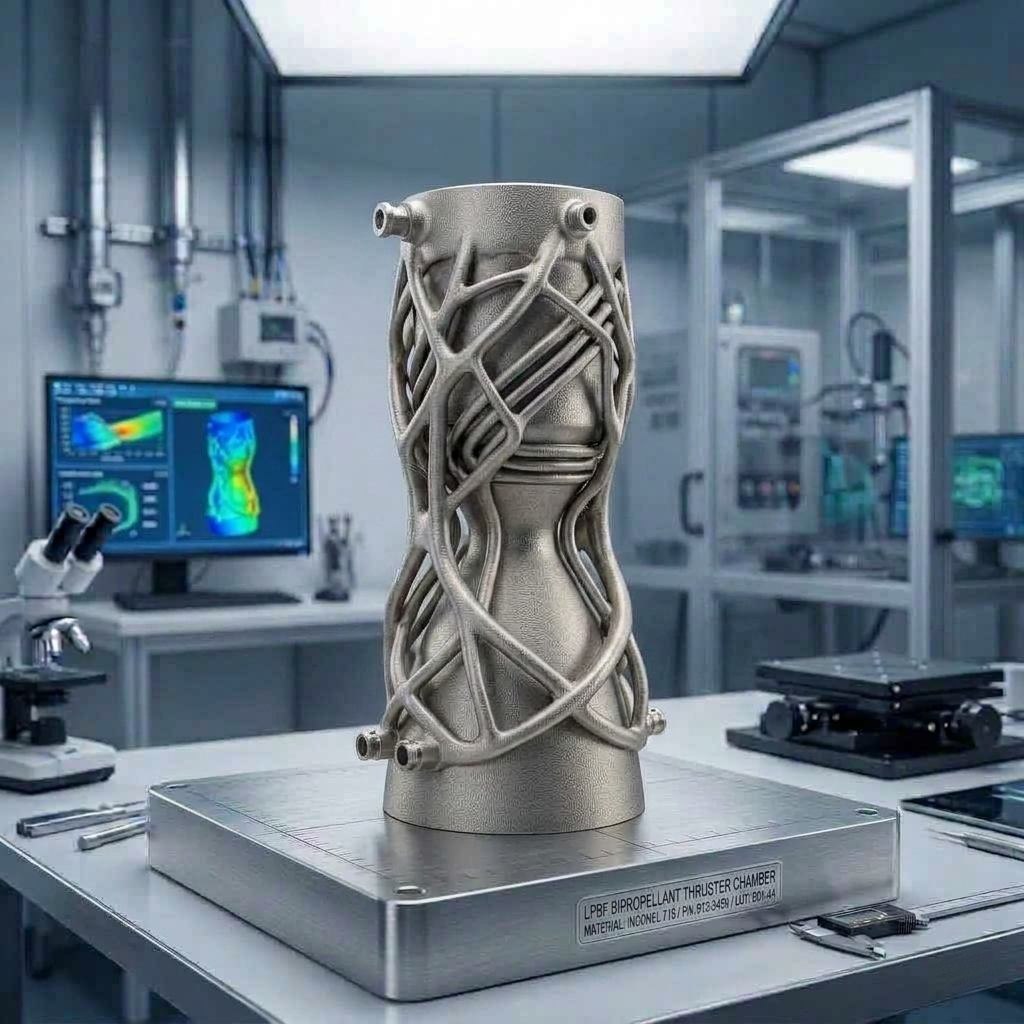
Green bipropellant thruster chamber
Cooling passages wrap the chamber contour and print as part of the wall they cool.
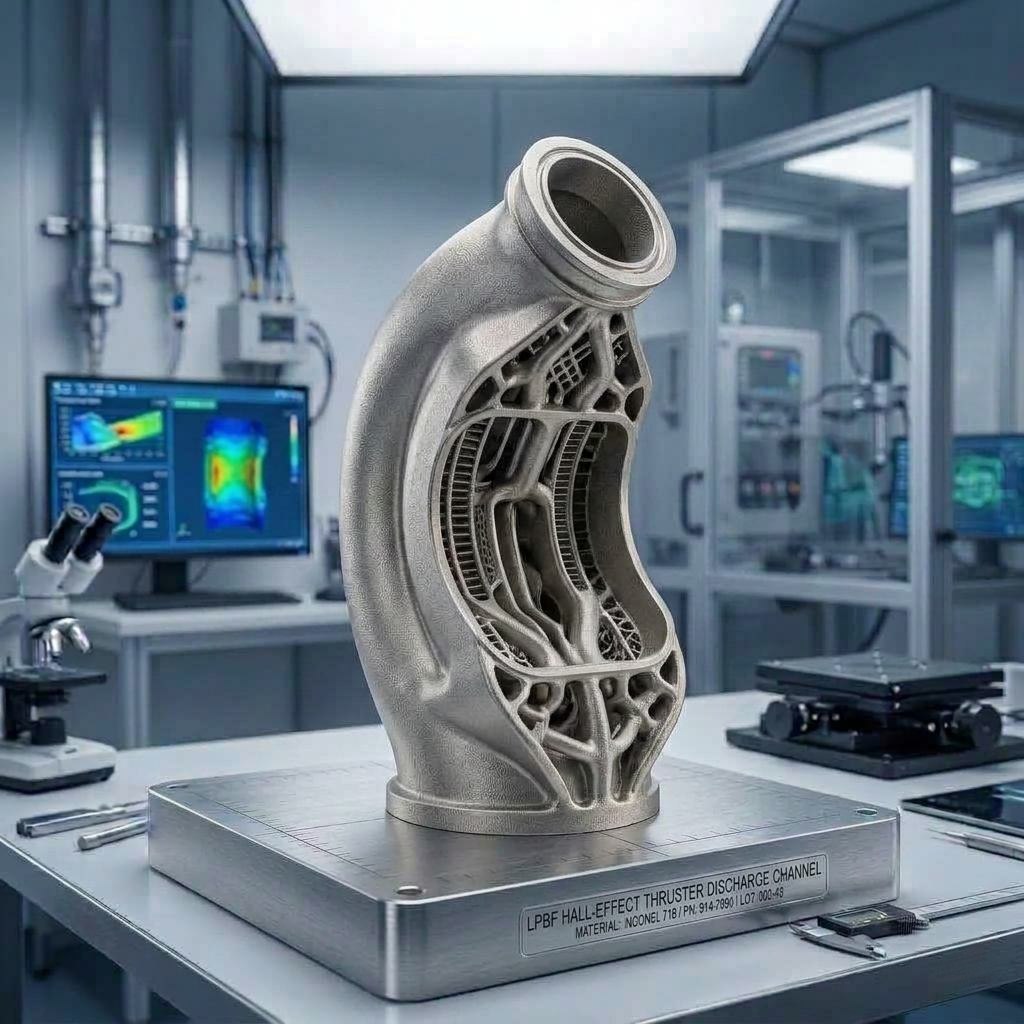
Hall-effect thruster discharge channel
No cutter reaches around this bend, so the ribs inside the duct wall grow with the duct.
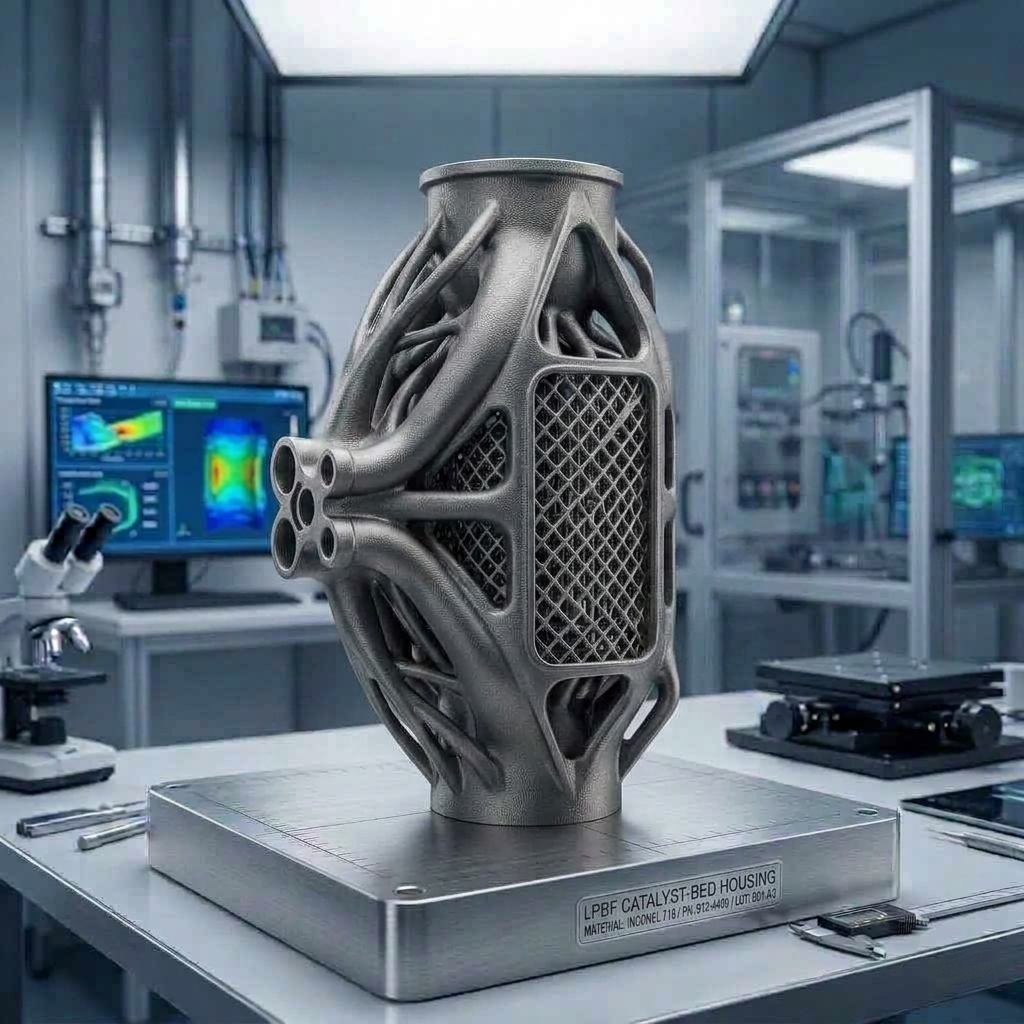
Green-propulsion catalyst-bed housing
The injector, the bed retainer and the housing grow as one body, so no joint needs sealing around the catalyst.
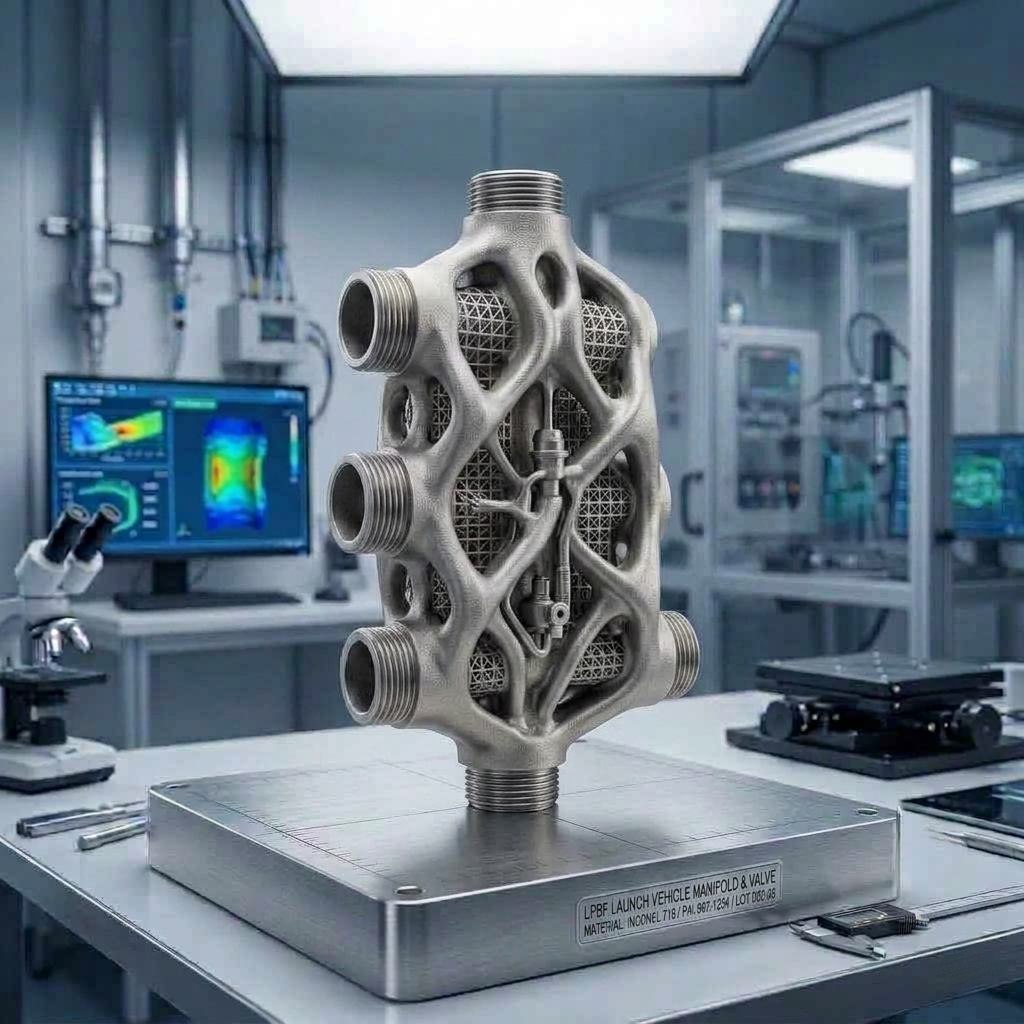
Launch-vehicle fluid valve / manifold
Flow paths curve the way the fluid wants, instead of meeting at the right angles a drill leaves.
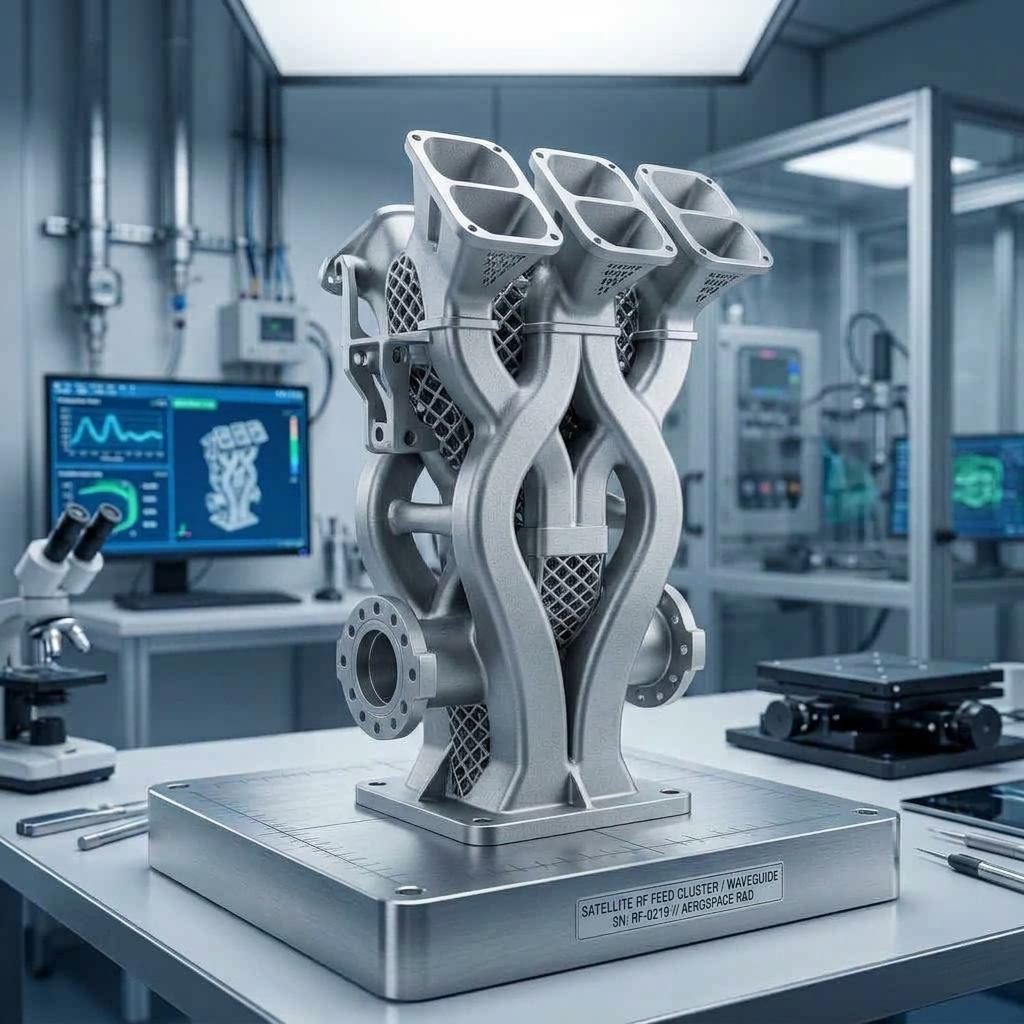
Satellite RF feed cluster / waveguide
The horns and their feed network arrive as one block, already aligned to each other.
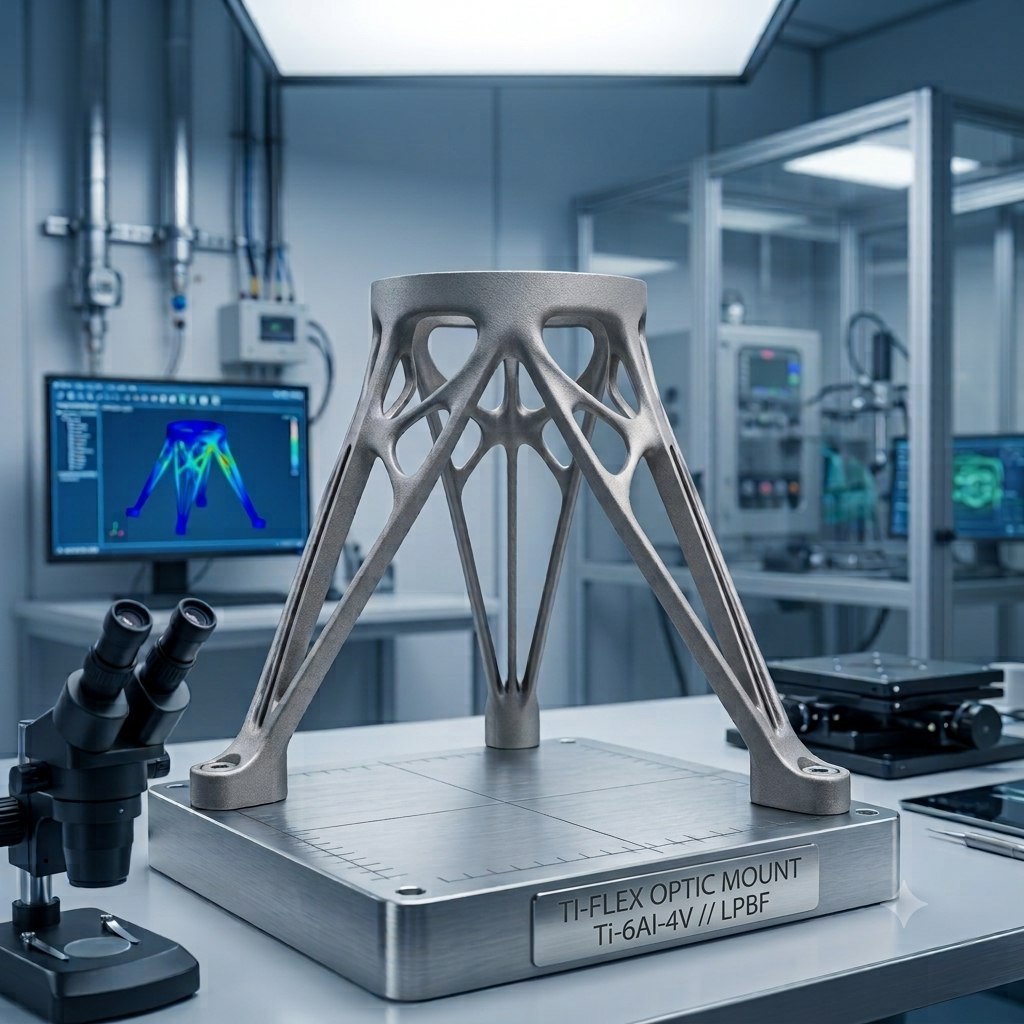
Optical instrument isostatic mount
Topology optimisation carves the mount back to its load paths, and the flexures print integral with the legs.
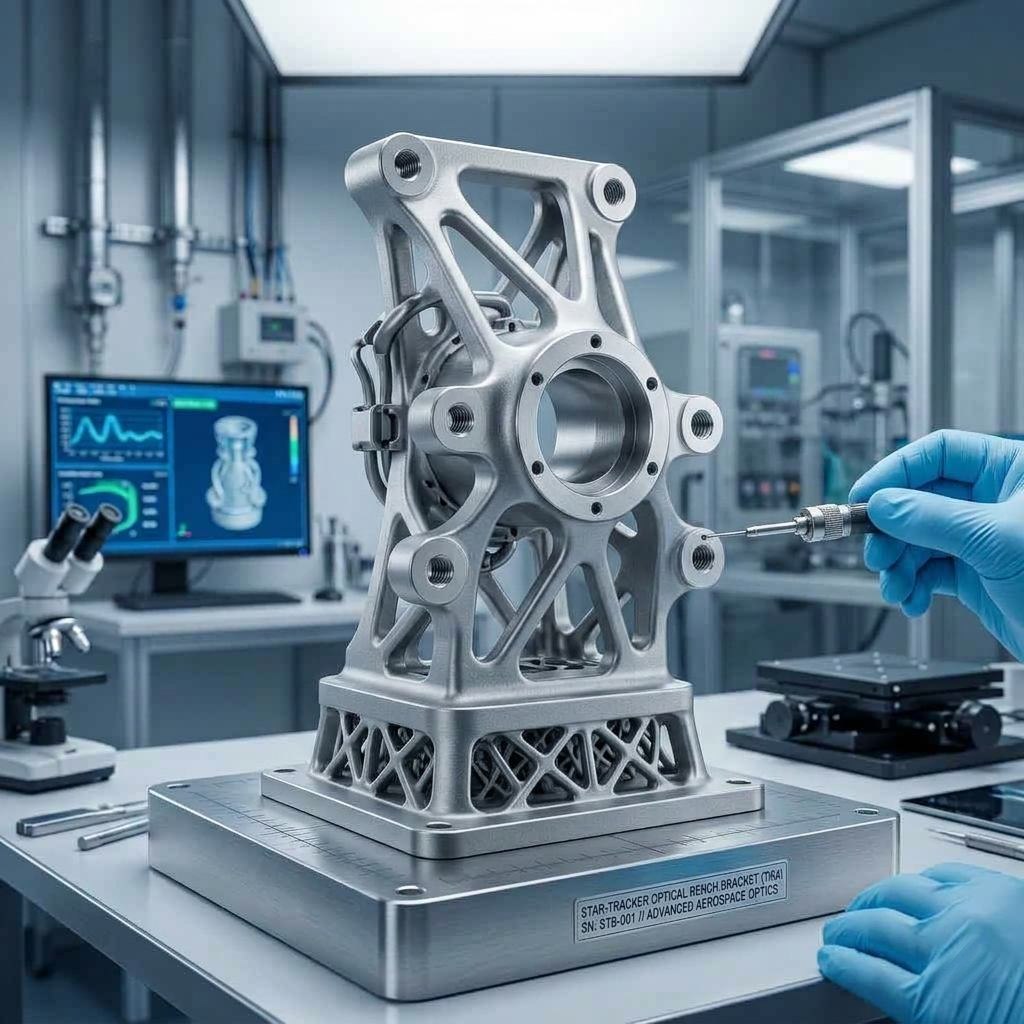
Star-tracker / optical bench bracket
No two optical benches match, and additive needs no tooling to follow the change.
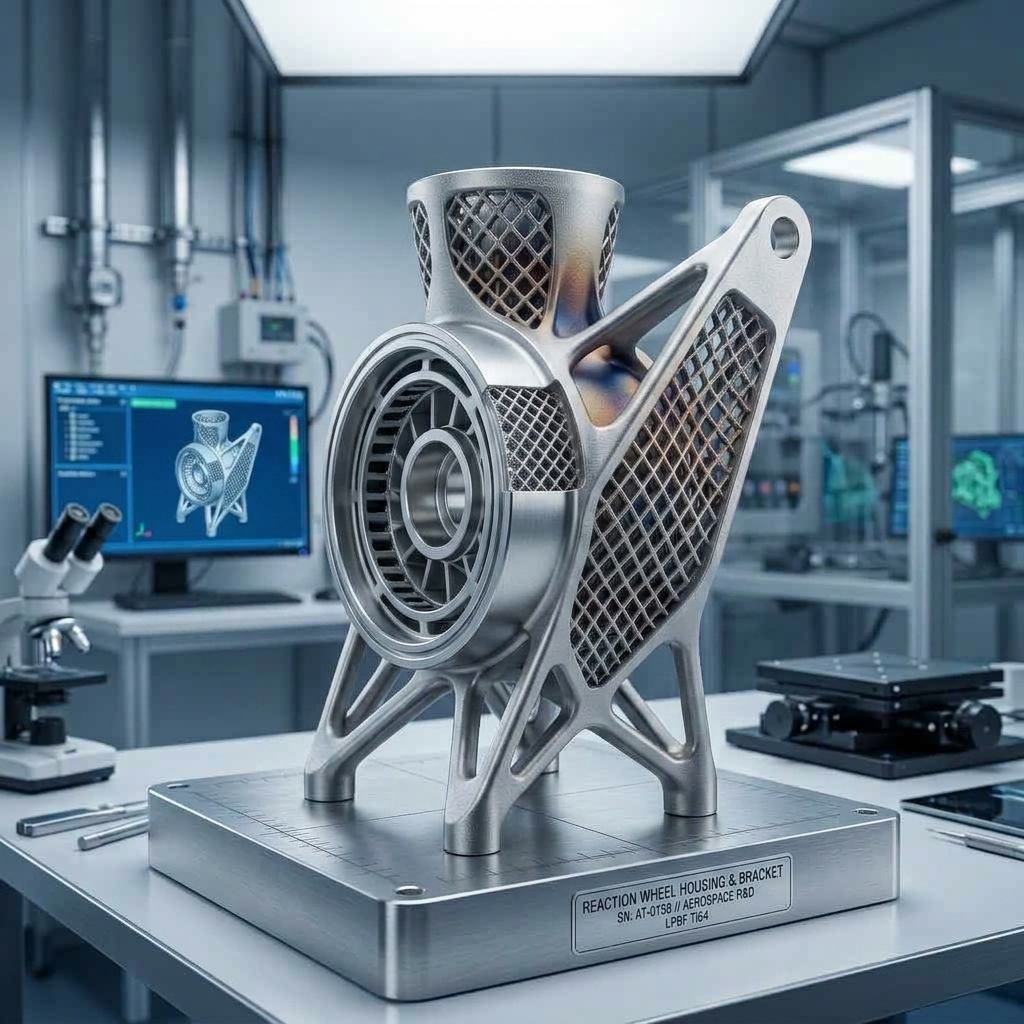
Reaction wheel housing & bracket
The housing and its bracket grow as one part, and the ribbing that tunes its stiffness prints with them.
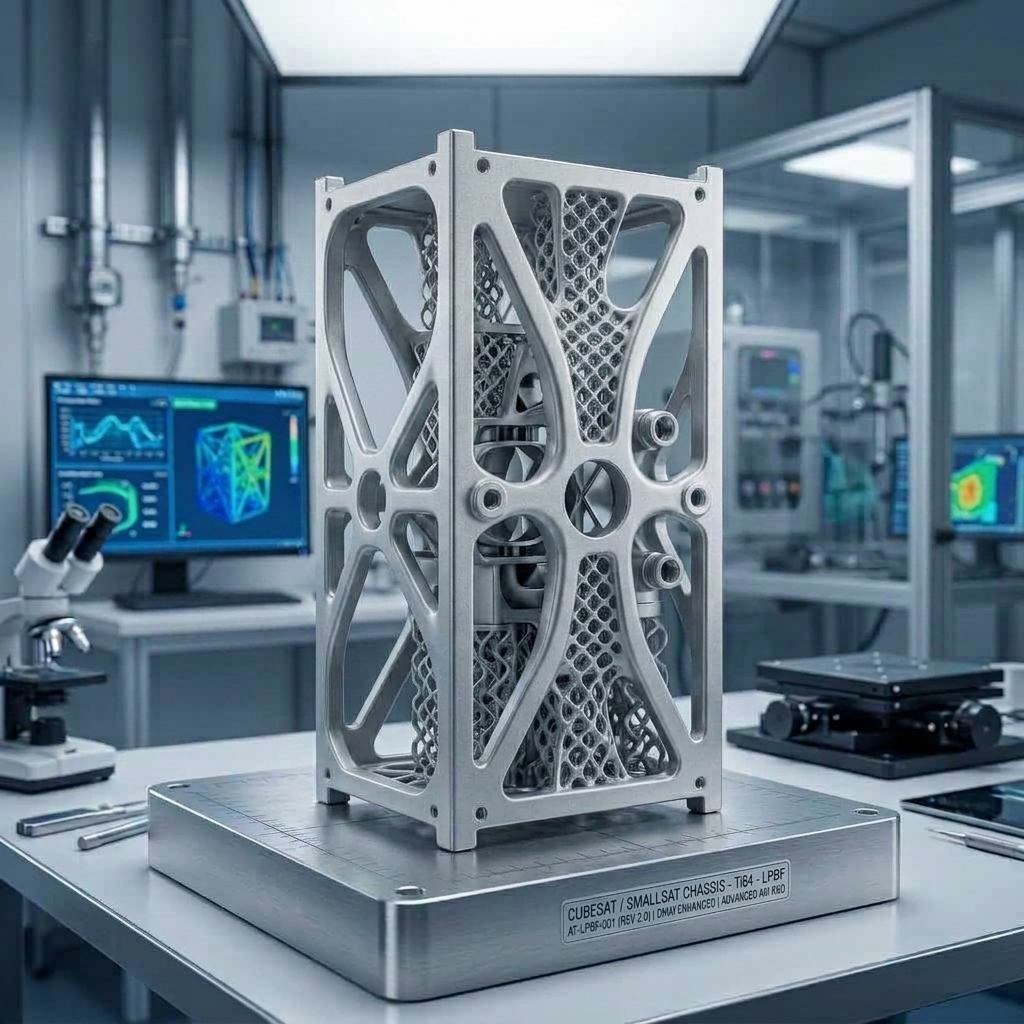
CubeSat / smallsat chassis structure
Lattice walls carry the load where machined rails would carry dead mass.
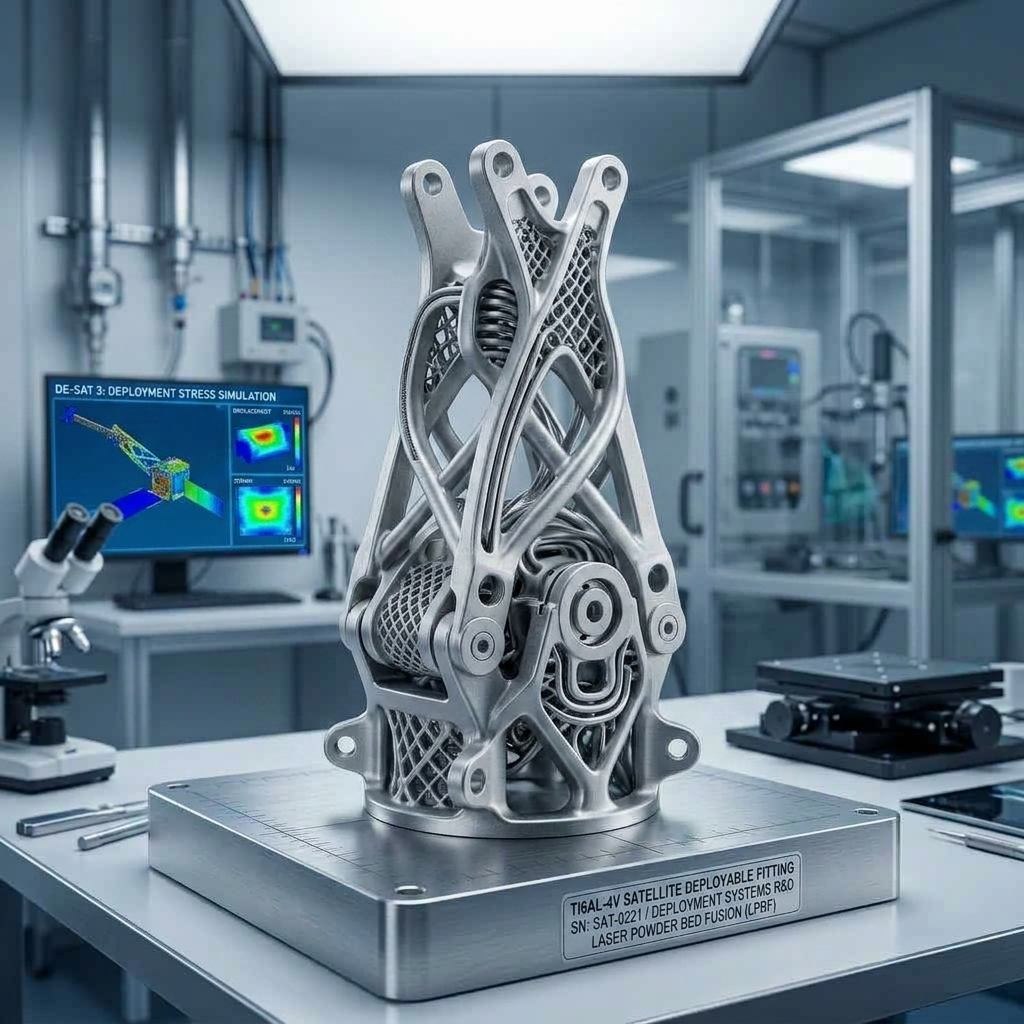
Deployable boom / hinge fitting
The hinge arms, the pivot boss and the stop grow as one fitting, so fewer fasteners can shake loose.
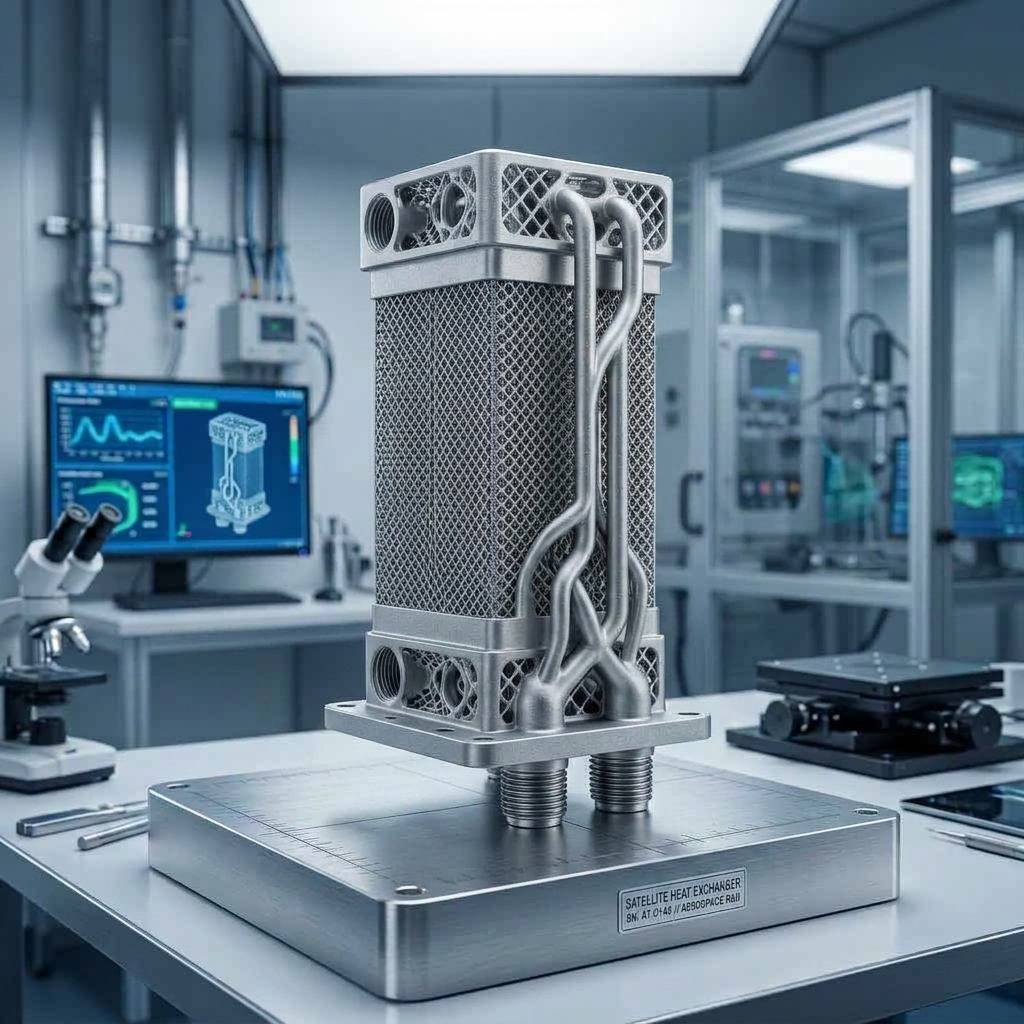
Satellite thermal / heat-exchanger panel
A lattice core folds heat-transfer surface into the panel, where a brazed fin stack can only run straight.
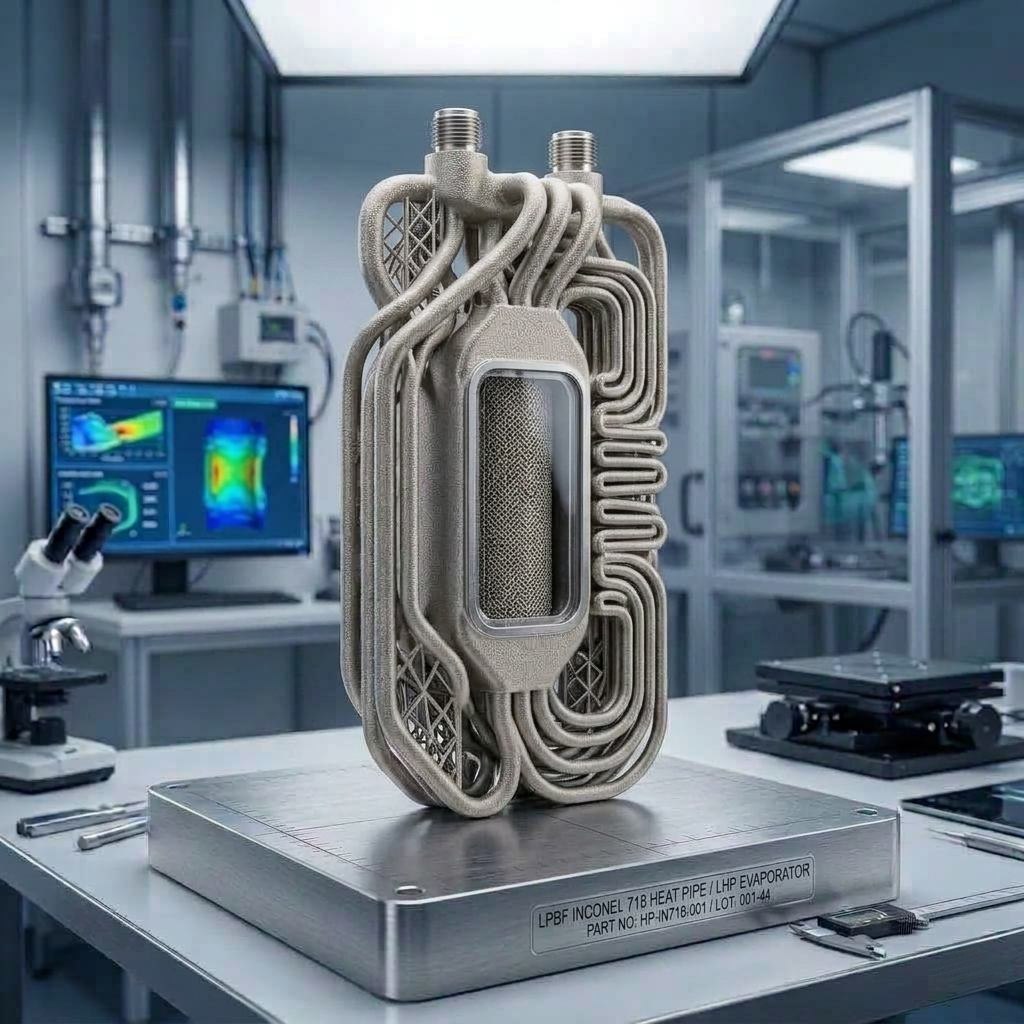
Heat pipe / LHP evaporator
The shell and its capillary wick come out of one build, not from an insert sintered and fitted later.
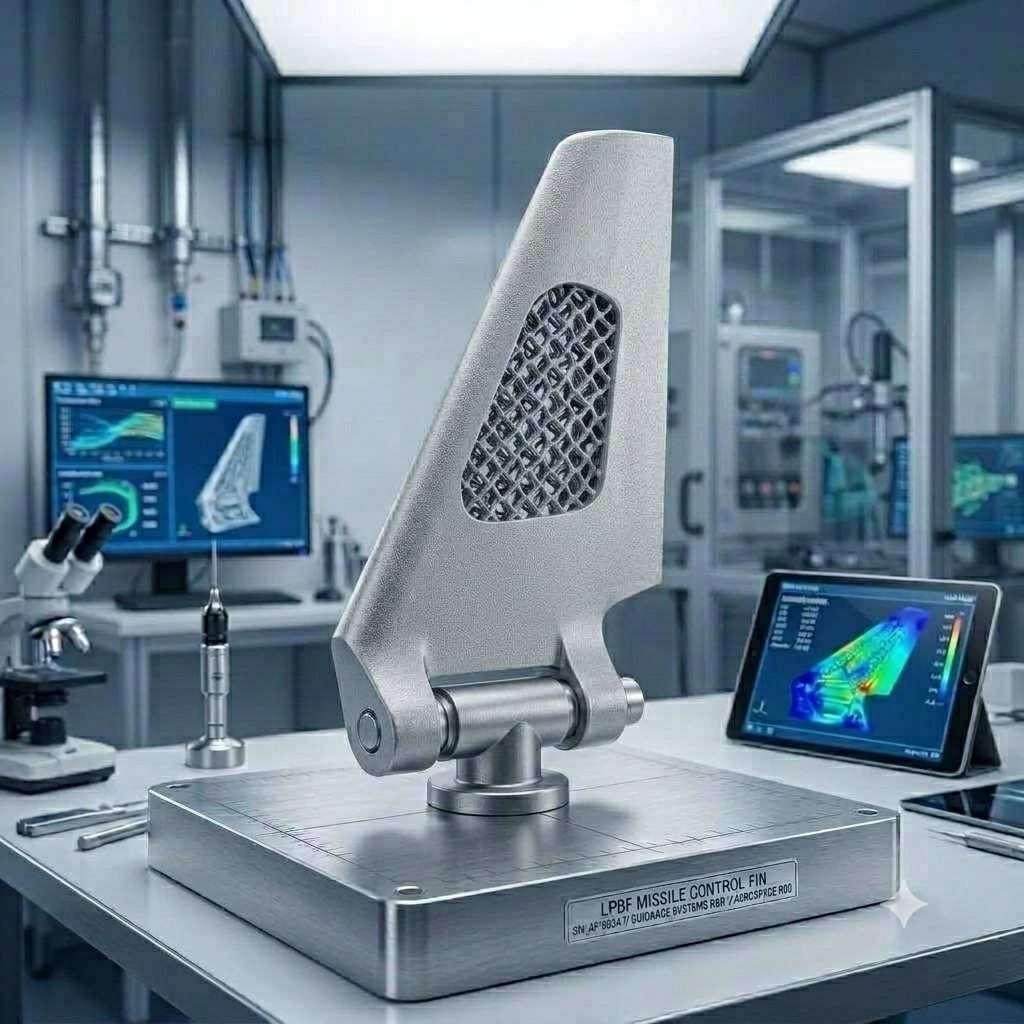
Missile control fin / surface
A lattice fills the fin where no cutter could hollow it out from solid.
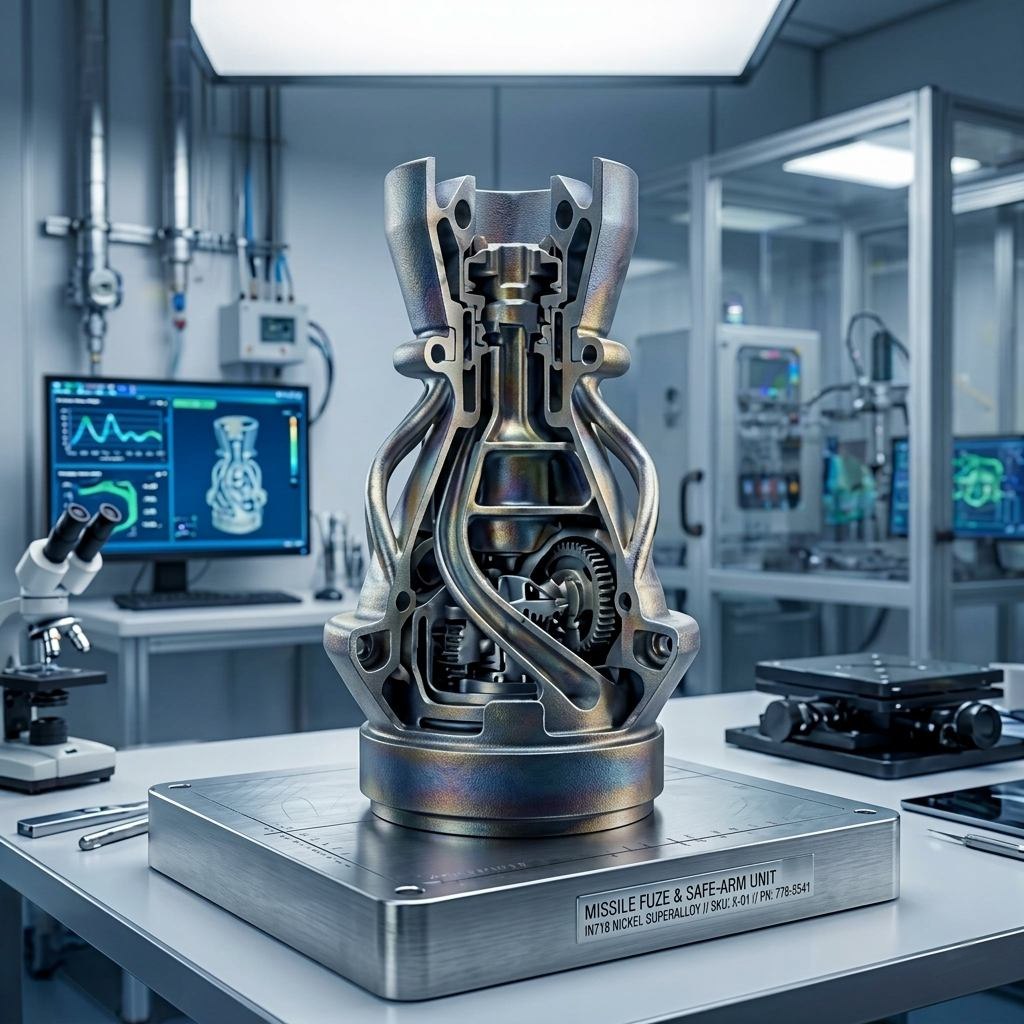
Fuze / safe-arm structural body
A monolithic body leaves no weld line in the load path for an authority to question.
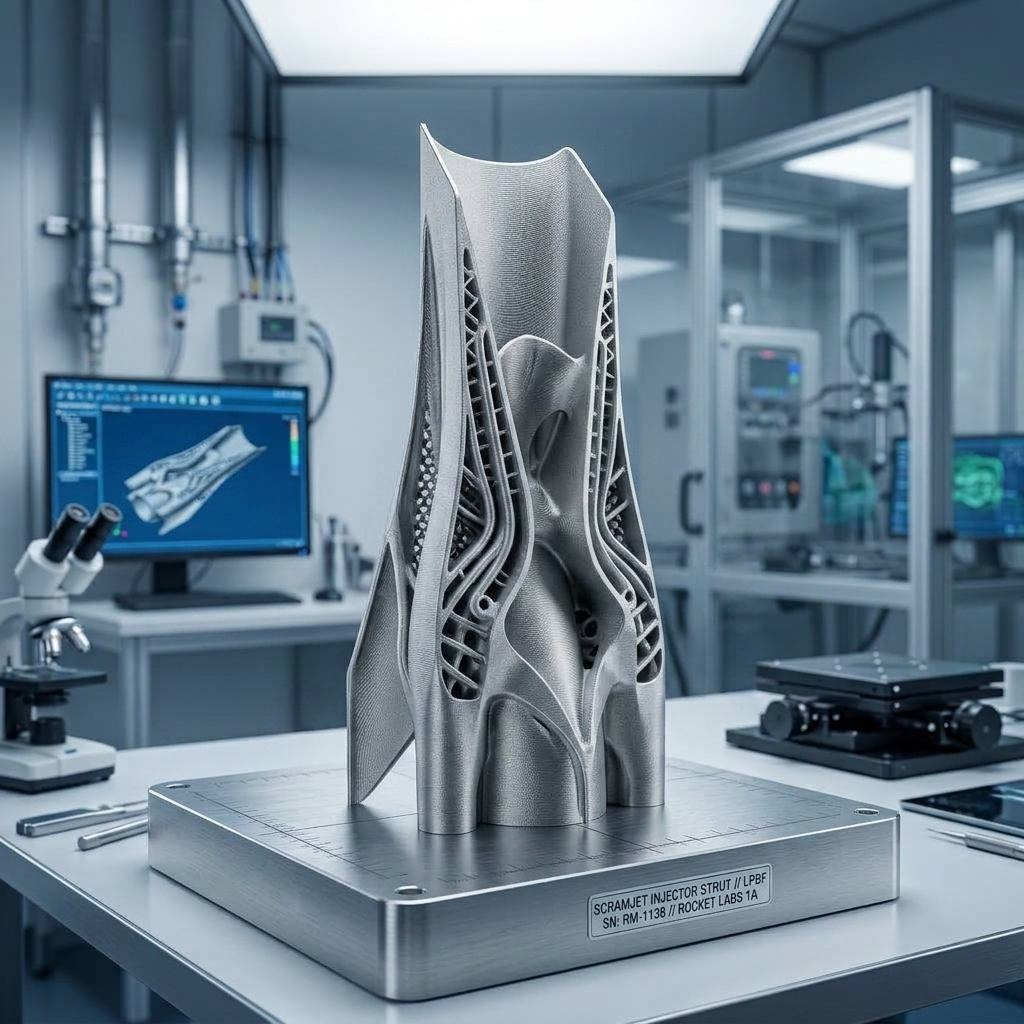
Ramjet / scramjet injector strut
Fuel galleries reach the injector face through a strut too slender to drill.
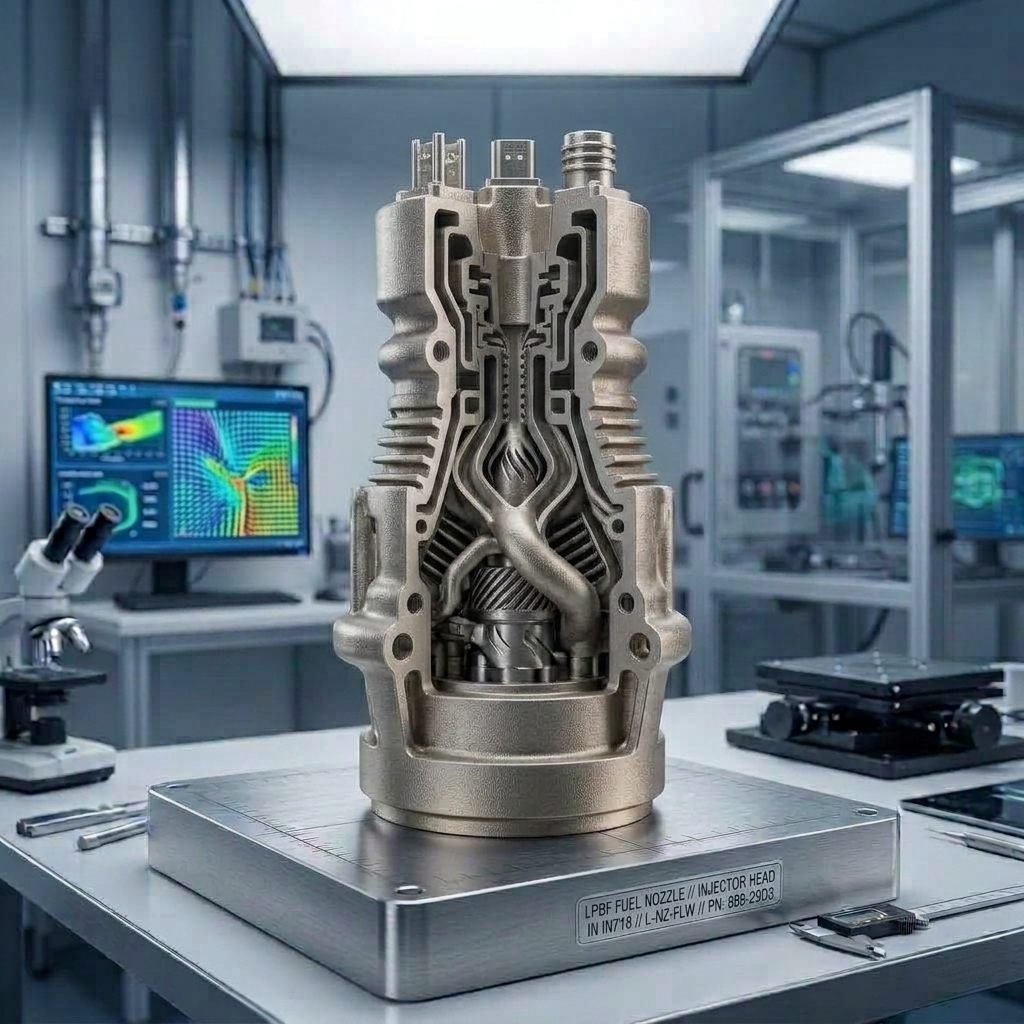
Fuel nozzle / injector tip
One tip replaces a brazed stack of parts, with the swirl passages formed inside it.
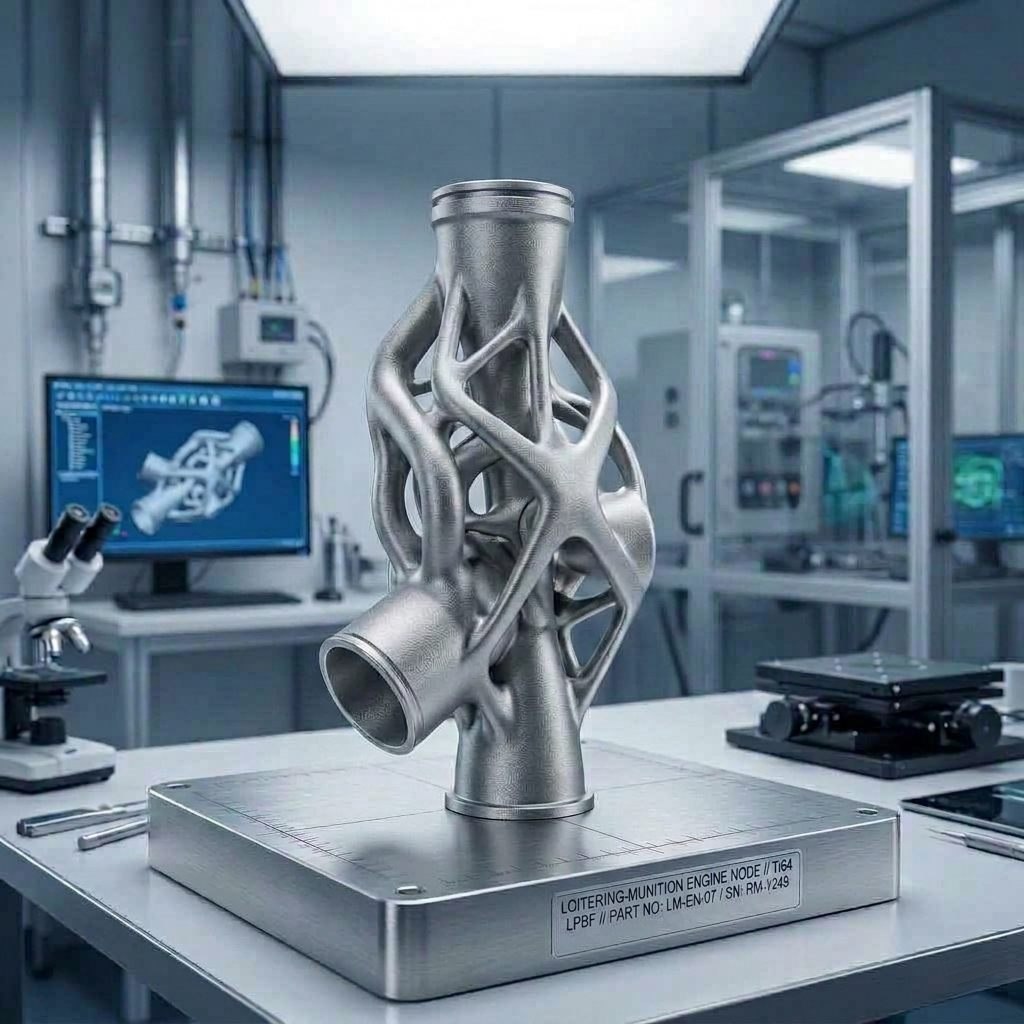
Loitering-munition structural / engine node
An attritable airframe cannot wait on tooling, and additive asks for none.
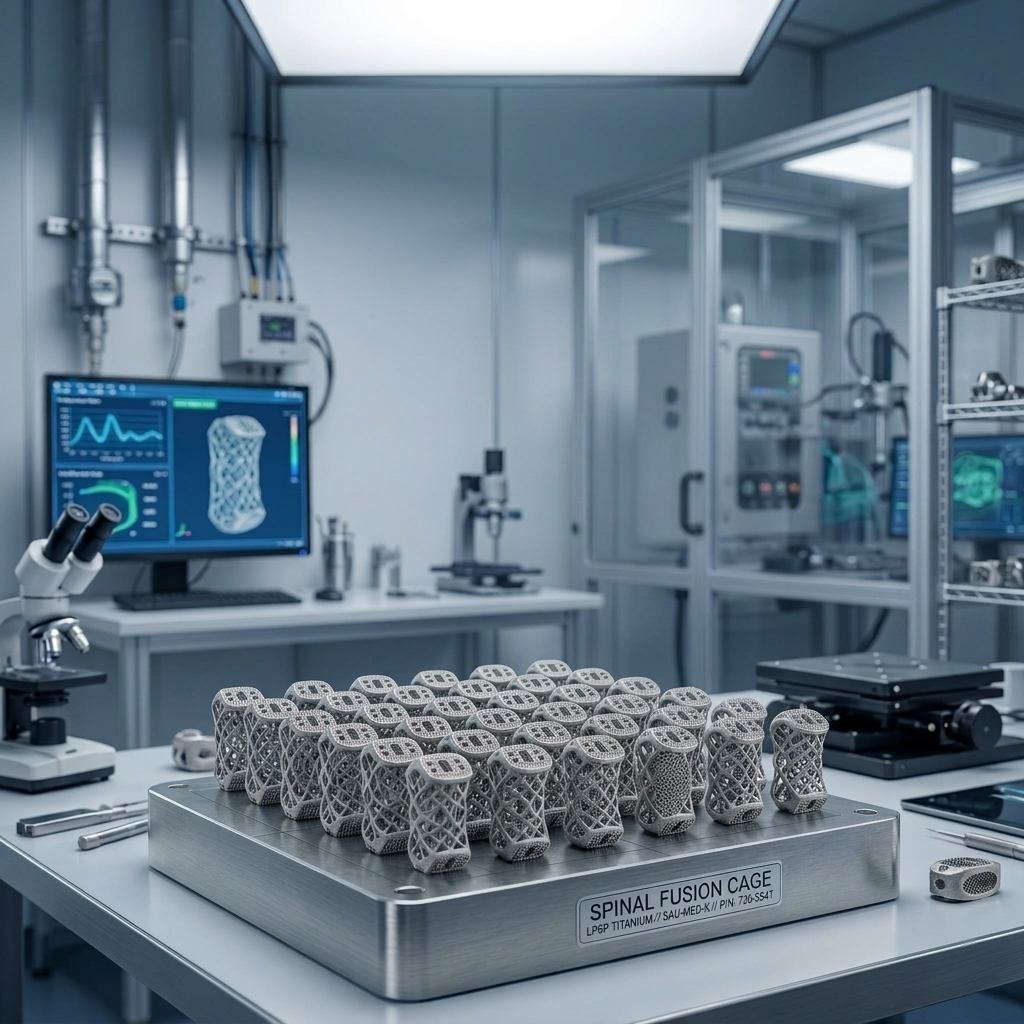
Spinal interbody fusion cage (porous Ti)
Porosity meant for bone ingrowth grows in one piece with the solid rim that takes the load.
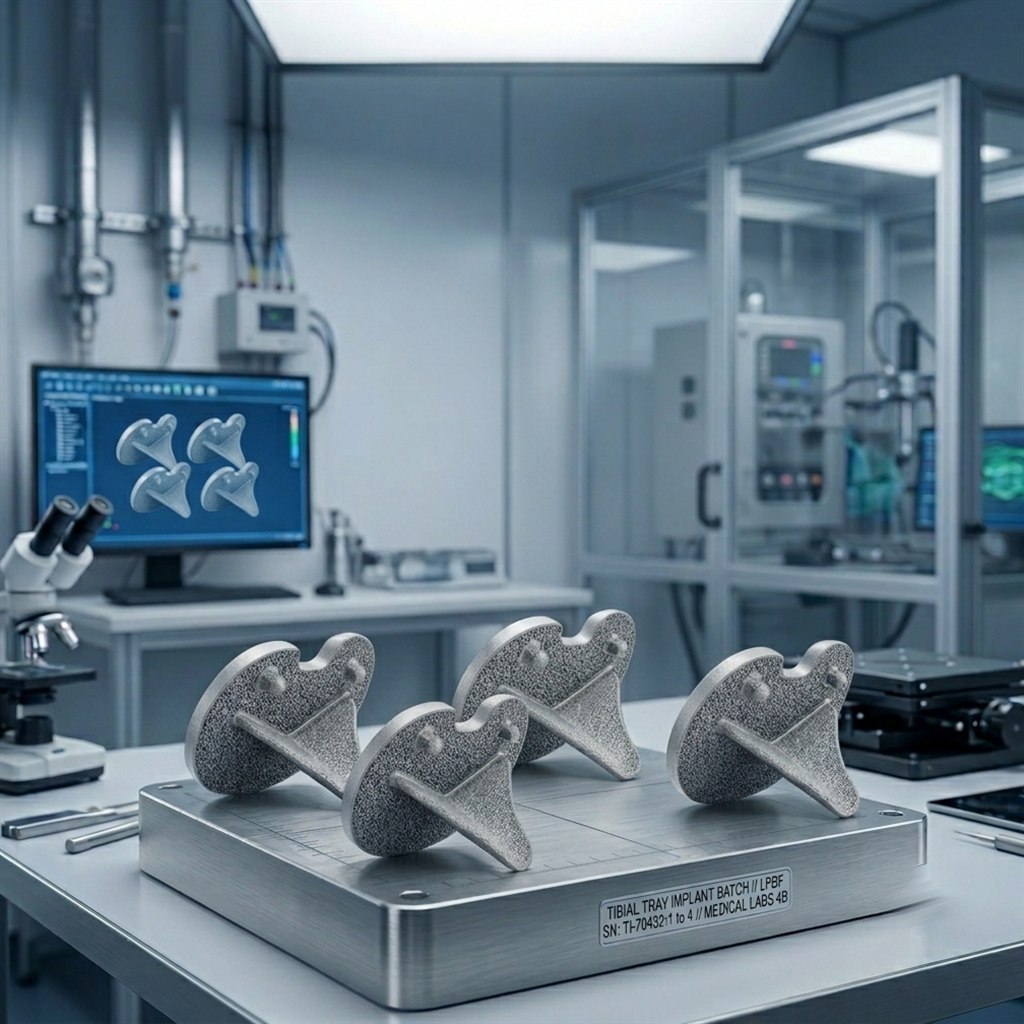
Tibial baseplate, cementless
The fixation surface prints straight onto the baseplate, replacing a coating sprayed on afterwards.
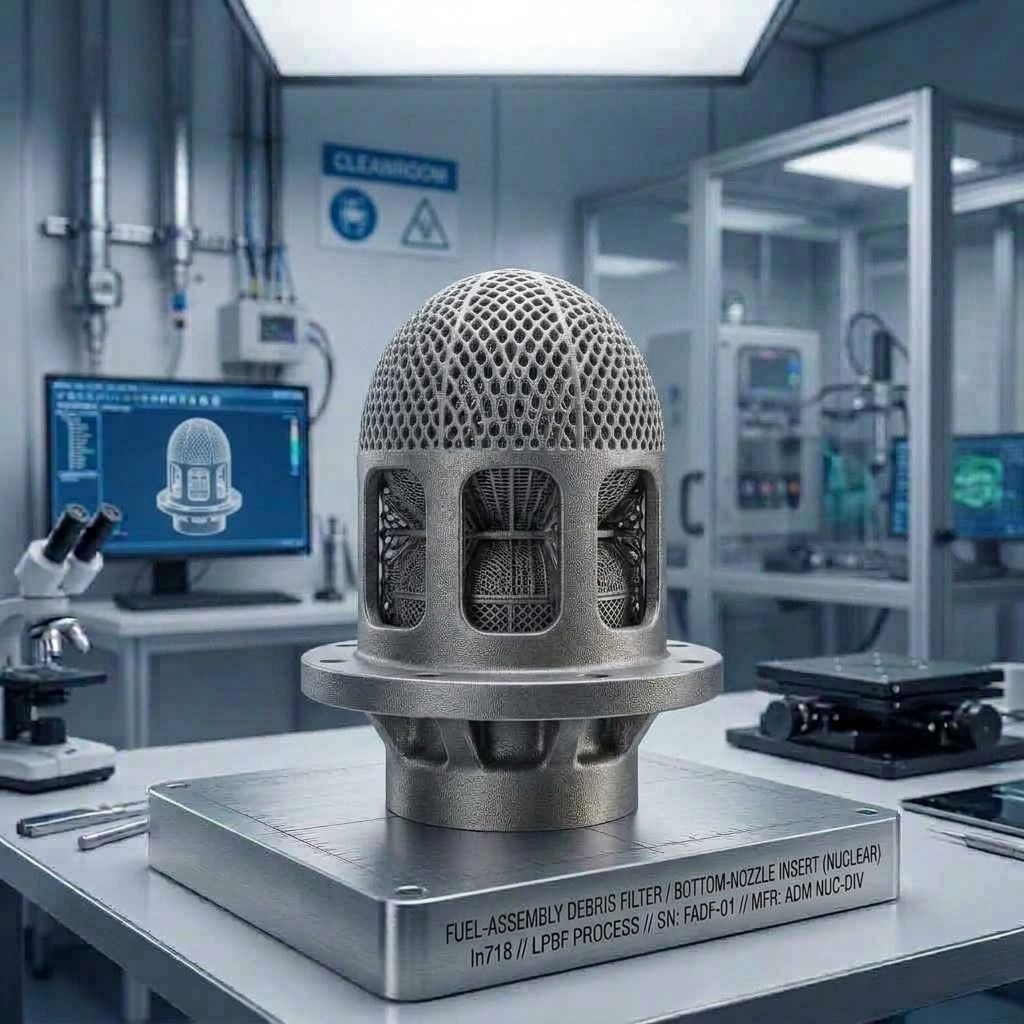
Fuel-assembly debris filter / nozzle insert
The filter's tortuous passages form in the build, where a drill could only leave straight holes.
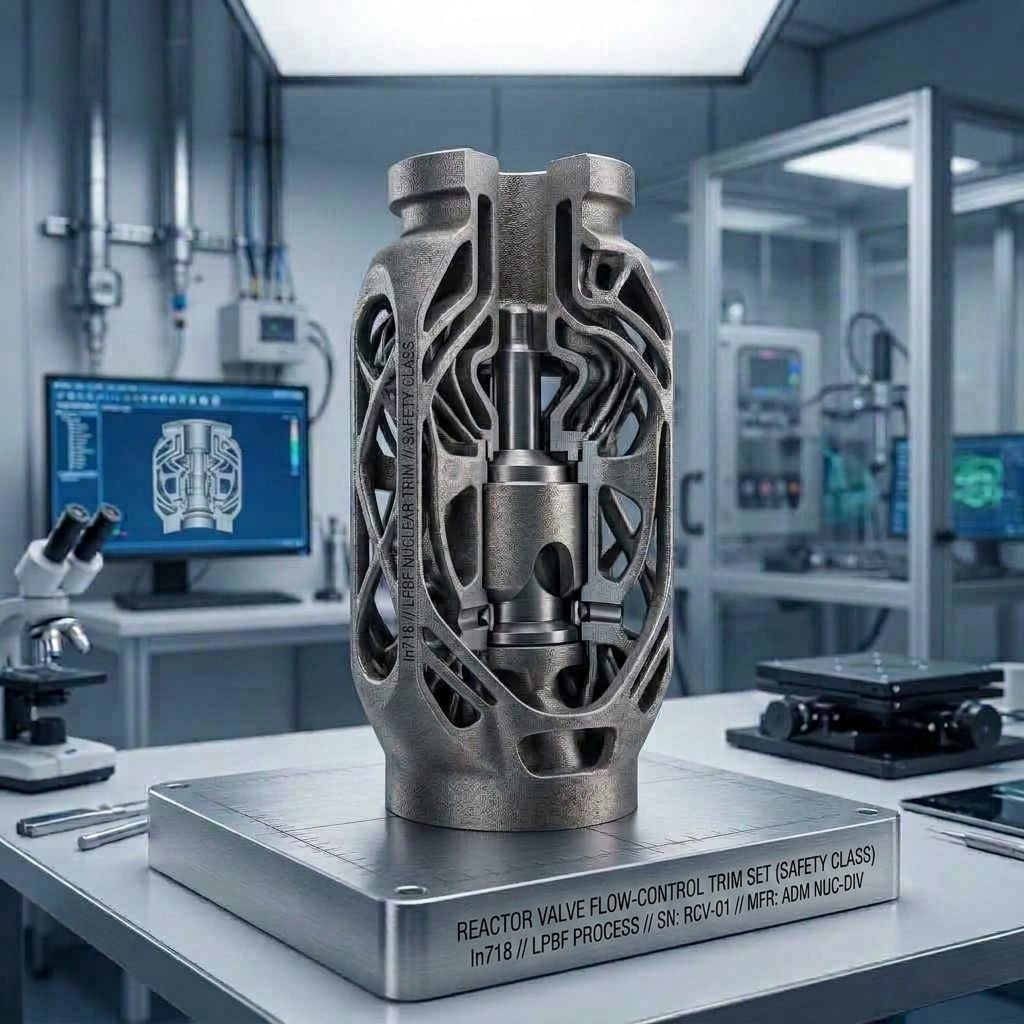
Reactor valve flow-control trim set
Additive rebuilds trim for an ageing plant when no casting pattern survives.
Concept renders for 21 of the 27 flagship part types in the researched set. Medical and Nuclear families enter production from Year 6, gated on ISO 13485 and NQA-1. Every part will be qualified to its programme’s acceptance criteria before it ships.
Don’t see your part? That’s the conversation.
We screen every candidate part for the geometry, alloy and economics where additive genuinely wins, and we tell you straight when it doesn’t.